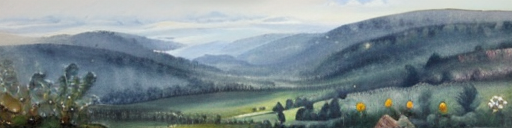
Twelve joined this ASK Salt Spring gathering to welcome the Salt Spring Island Farmland Trust’s (https://www.ssifarmlandtrust.org/) Executive Director Andrea Palframan and Board Chair Jenn LeBlanc. While not a large group, after our gathering, Andrea noted that each one of our participants brought a unique and valuable perspective, creating a quite wonderful conversation.
After an Acknowledgement during which Andrea spoke of the power of healing relationships offered to us by Reconciliation, we had a chance to introduce ourselves. Among the participants were several farmers and long-time agricultural advocates as well as a few elected officials and some who were simply excited about the potential of eating what we grow, wanting to learn all that they could.
Jenn told us that she was “excited and delighted” by living on Salt Spring, a welcome respite after years in Silicon Valley running a tech marketing firm as well as supporting female founders in securing venture capital and funding. Bringing a passion for food as medicine, she is delighted by her role in the Farmland Trust building programs to increase local food production and consumption. She is also delighted by her rescued black lab pup, surviving his teenage years with love and confidence.
Andrea is “excited and delighted” by her garden, visiting it morning and evening, savouring its constant change and growth, especially her recently-planted Loganberries. She is also thrilled about the progress of the Farmland Trust, noting her pleasure working with First Nations, seeing our farms as symbols of both past conflict and current collaborative opportunities.
Before we began to learn more about the plethora of programs offered by the Farmland Trust, a participant took a few moments to say how proud she was of its progress. She recalled meeting not that many years ago when the need for a farm, an abattoir, a composter, and a production/storage facility were discussed. She shared her appreciation that, in relatively few years, Salt Spring had all four of these important needs for local food security – crediting the Farmland Trust with a major role in these successes.
During our time together, we were all surprised by the many activities of the Farmland Trust offers, making it a thriving hub for local food, culture, and community. Its facilities include the Burgoyne Valley Farm with 90 community gardens, space for tenant farmers, an agro-voltaic research project, a community composter, the Root Food Hub for local food producers, and collaboration with Royal Roads University including the management of the Bloom Castle orchard on Beddis Road. Added to these initiatives are its array of programs to address the interests of community members including learning about regenerative growing and farm-to-table foodways, juicing, seed exchanges, young farmer training, and food sharing/gleaning (https://www.ssifarmlandtrust.org/foodshare).
The Burgoyne Valley Farm (https://www.ssifarmlandtrust.org/facilities), a 60-acre farm dedicated to locally producing food, increasing biodiversity and pollination, and protecting species and waterways, is the home of four farm businesses including the Salt Spring Island Community Services’ Harvest Farm programs (https://www.harvestsaltspring.ca/) as well as 90 families who each tend a 1000 sq. ft. allotment. Gardeners take pride in tending their allotment and participate in regular work parties to tend common areas. In the rare instances when one gardener cannot do the work needed, others come together to help give the garden the care it needs.
Located at the Burgoyne Valley Farm is a community composter operated by the Abattoir Society https://saltspringabattoir.ca. Newsworthy (https://wasterecyclingmag.ca/circular-economy/salt-spring-island-to-begin-commercial-composting), it is clearing regulatory hurdles so it can scale up from its current capacity processing abattoir waste, to begin processing the organic materials generated by our food businesses (grocers, restaurants, etc.) and residences where on-site composting is not possible/permitted. Cited by George Heyman, the former BC Minister of Environment and Climate Change Strategy, as groundbreaking, he said:
“Salt Spring Islanders are known for taking action to fight climate change and to support sustainable local food systems and a healthy environment. . . . This investment will help reduce Salt Spring Island’s carbon footprint, transform its food waste into productive agricultural soil, and support a strong, local economy and food security.”
A complicated undertaking with some unexpected hiccups along the way, Jenn and Andrea are confident that imminent CRD bylaw changes will make the composter more and more successful in the coming months.
There was quite a lot of interest in this ASK Salt Spring gathering about residential use of it. This interest was spurred by a surprising fact: Did you know that food waste taken to landfills is Salt Springs largest producer of greenhouse emissions? While many landowners compost their green food waste, too many living in apartments and multi-family units cannot compost. Andrea and Jenn were asked by participants whether this composter could take their organic waste. “Hopefully soon” was the answer. The Farmland Trust has recently applied to the CRD for funding to do a feasibility study exploring collection and processing options. Stay tuned. . . .
In addition to the farm, abattoir, and composter, Salt Spring’s 2008 Area Farm Plan (https://www.ssiagalliance.org/_files/ugd/c2857e_a54f9261fbc24aa79a6e3a91144edfba.pdf?index=true) identified the need for a location to process and store local food. This, also, has been accomplished: The Root, a 3,000 square foot building located at 189 Beddis Road on a site contributed by the Slegg family, officially opened its doors in Spring 2023. With a commercial kitchen, food processing/storage facility, and workshop/events venue, it operates as a social enterprise supporting small-scale farmers and local food producers.
While its function has changed over the years to meet always-evolving food production needs, the Root has become an active centre for those committed to eating local. In addition to many other programs, it supports:
- Seed Sanctuary where you can exchange seeds. Did you know that, for a mere $20, you can become a lifetime member with access to its seed library as well as seed sharing events?
- Commercial Kitchen and Culinary Workshop Learning Centre,
- Barn for hosting workshops and events,
- Permaculture demonstration restoration garden,
- Multi-purpose food processing space,
- Self-standing shipping container suitable for food storage,
- A great local culinary experience, Ox Eats Grass (https://www.oxeatsgrass.ca/) food cart, and
- The list goes on. . . .
Andrea shared her enthusiasm for one of the Farmland Trust’s newest ventures, Get Juicy (ssifarmlandtrust.org/get-juicy), a community effort to raise $20,000 to provide refrigerated storage and juice pasteurization for its fruit rescue program. How often have you seen unharvested fruit rotting on the ground, a victim of Salt Spring fall abundance? Working with fruit tree owners, this fruit rescue program has Food Share volunteers who pick fruit that would otherwise go to waste and repurposing it into amazing juice.
Taking this successful program one step further, Andrea and Jenn hope to raise $20k this season so that the Farmland Trust can store and pasteurize juice for sale to sustain programs. Interested? Please donate whatever you can. $20,000 is a very doable goal for generous Salt Springers to support local food production and consumption: and as a registered charity, you will receive a tax receipt for all of your donations to the Farmland Trust.
Consumed by our lively conversation about all these intriguing programs, we only briefly discussed the Farmland Trust’s innovative partnership with Royal Road University, Salt Spring Island (https://www.royalroads.ca/campus/rru-salt-spring-island) offering regenerative coursework and orchard management. As Royal Roads University works to roll out university level programs on the island, The Farmland Trust’s Root to Bloom Centre offers courses drawing on the expertise of island growers, chefs, and foodies like Jane Squier, Linda Gilkeson and Melanie Furman. Interested in knowing more? Course catalogues with upcoming offerings are at: https://www.ssifarmlandtrust.org/root-to-bloom,
Want to know more about the exciting Royal Roads initiative? You may want to read: https://asksaltspring.com/2026/03/27/welcoming-royal-roads-university-president-to-talk-about-rru-salt-spring/).
Most of us were surprised by the breadth of the Farmland Trust’s offerings, including programs, properties, and initiatives, wondering why we have not previously heard more about them. With both Chair Jenn and Executive Director Andrea’s expertise in communications, we learned that signage is considered an important way to begin to get the message to Salt Springers. Adding frequent, personalized email communication and much use of the Salt Spring Exchange’s island-wide reach, they are doing a great job laying the foundation for their very large communication task. As expected, there were also suggestions from participants for additional communication strategies to consider. Look for even more Farmland Trust program information in the coming days.
As our time together drew to a close, we shifted our attention to another large part of the Farmland Trust’s mission: Supporting farmers through coordination and advocacy. Salt Spring’s farming community is estimated at about 200 part time farmers with only a handful of them full-time, many producing vegetables.
Andrea and Jenn are convinced that, with coordination, local farmers could provide a higher percentage of our local food consumption (estimated today at under 10%). Local grocery stores will buy local produce, but they require sufficient and predictable quantities as well as delivery on time and at an accessible cost. Unfortunately, it is too often more efficient for them to buy from larger producers on Vancouver Island.
While many farmers do well at our Saturday and Tuesday markets, what about those misshapen and less-than-perfect vegetables? How can they find a market for this tasty, but not beautiful, produce? Also, many farmers work dawn to dusk with neither the time nor the inclination to coordinate marketing solutions.
Added to the challenges faced by vegetable producers are those faced by livestock producers. As a result of increasingly-restrictive regulations, livestock farming has dropped over the years, Even though the establishment of the abattoir in 2012 helped stem the decline, Salt Spring has a great many under utilized acres suitable for livestock grazing. Despite the worldwide fame of our “Salt Spring Lamb,” very little is actually produced here. Why? It is really hard work, with costly inputs, to go from cute lambs to food for our table.
Adding to the challenges of farming on Salt Spring is the ever-present need for workers to find housing. Jenn and Andrea are exploring housing solutions on farm land while also aware of the care that is needed to ensure farm worker housing contributes to increased agricultural production, without removing valuable arable lands from the ALR.
We were reminded by a farmer participating in this ASK Salt Spring gathering: “Most farmers simply do not make money!” While it is good and far tastier to have locally produced food and lovely to see picturesque farms as we struggle to maintain our rural character, we left with the knowledge that it will take a village working together to support the resurgence and continued growth of farming on Salt Spring. Luckily, we have a very active Farmland Trust under the capable leadership of Andrea and Jenn to explore possibilities and pave the way to solutions.
When we said “farewell,” we were excited by the remarkable activities of the Farmland Trust, each of us committed to attend more of its events, intrigued by donating to Get Juicy, and very pleased that Jenn and Andrea are leading the way, using their knowledge, experience, energy, and deep commitment to local food. (Thanks Andrea and Jenn!)
Just in case you are interested. . . .This report has been written by Gayle Baker, founder of ASK Salt Spring, currently also a Salt Spring Local Community Commissioner. It has been reviewed by Andrea and Jenn.